A practical problem. A reason to build.
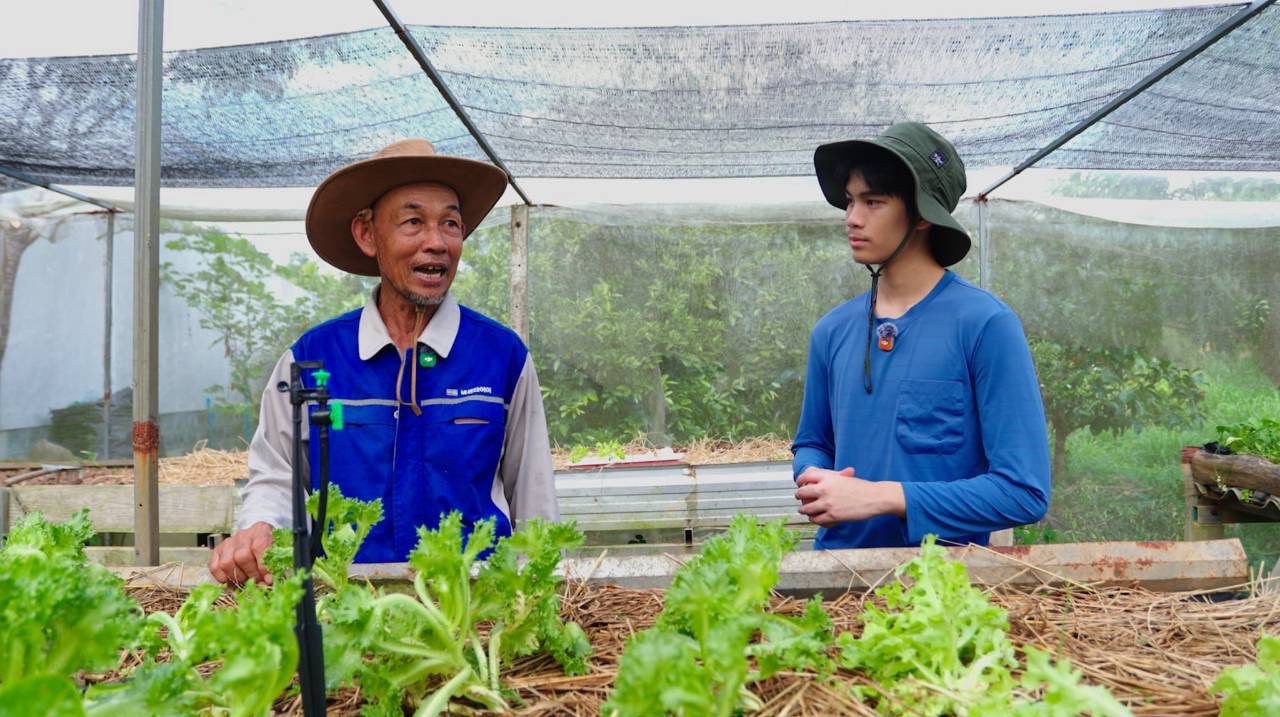
During a visit to Phanom Sarakham, Chachoengsao, Tul met a farmer who needed a more manageable way to water his garden. That conversation led him to learn how to build a simple smart irrigation system.
When no one is there to water.
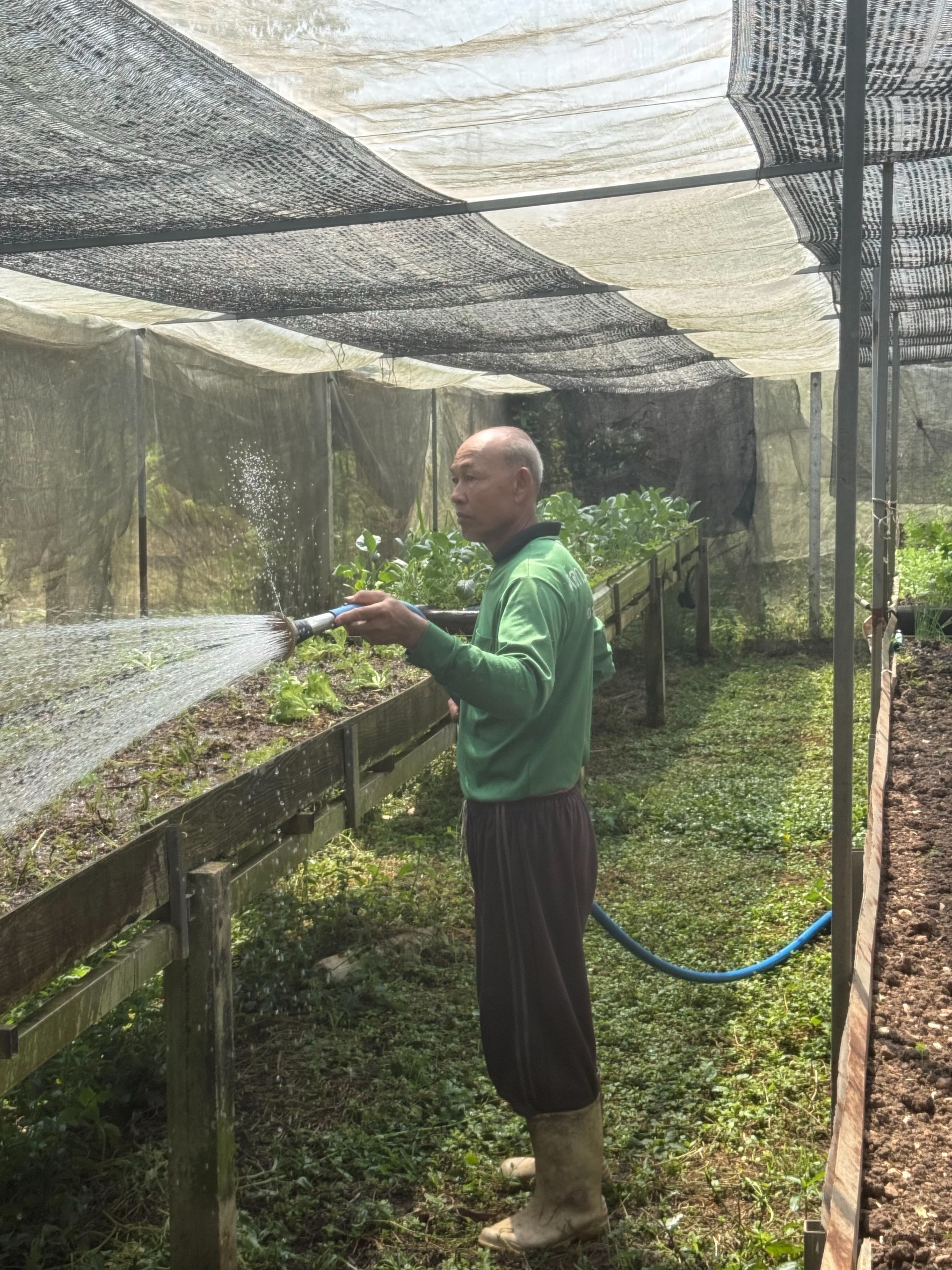
The farmer explained that watering became inconsistent when he had to leave the garden for appointments or errands and no one was available to help. He was interested in automatic irrigation, but the systems he had considered were beyond his budget.
Tul offered to develop and install a simpler system. The aim was to make watering easier to manage while exploring ways to reduce water use, electricity use, and the time spent on manual watering.
Learning by building.
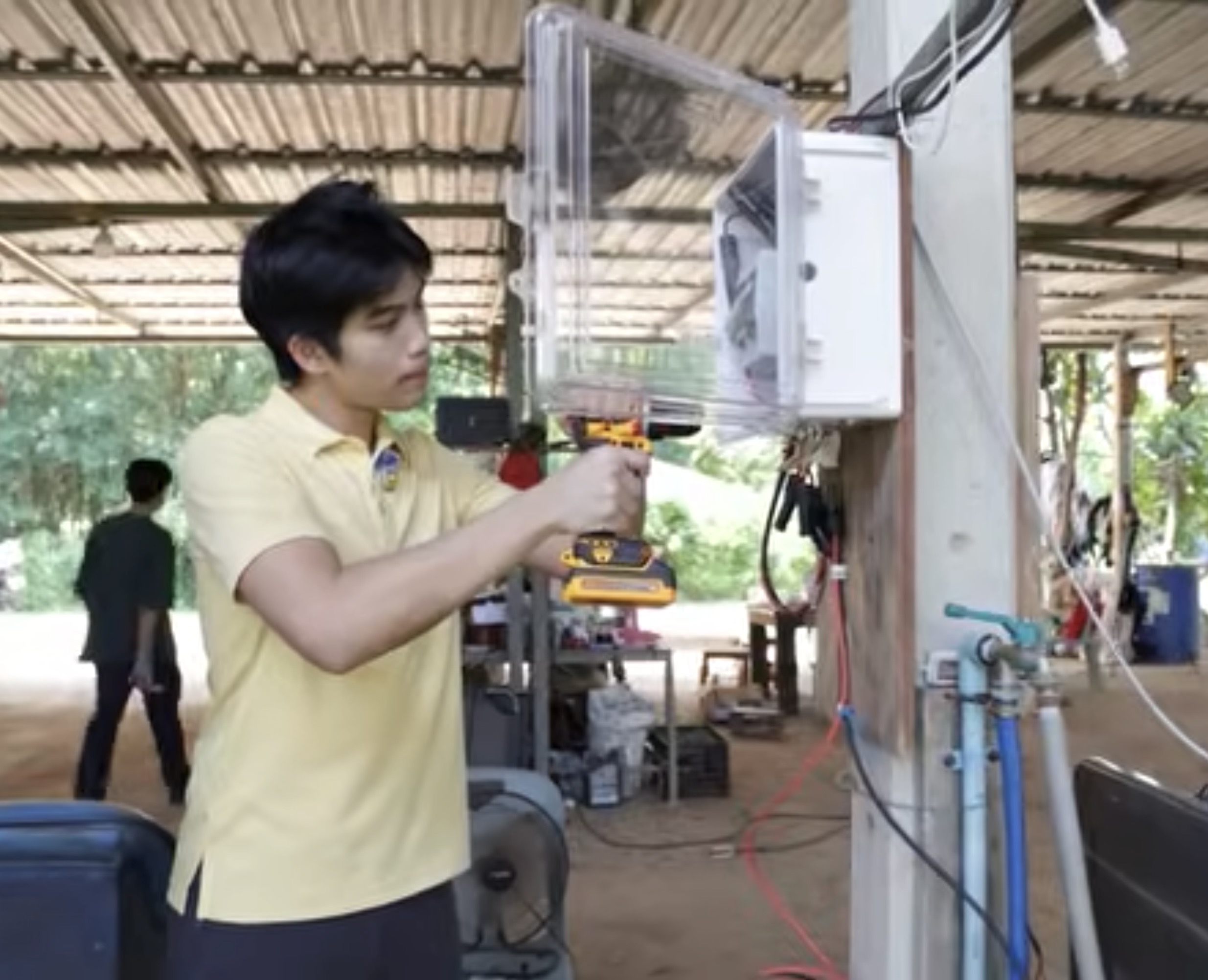
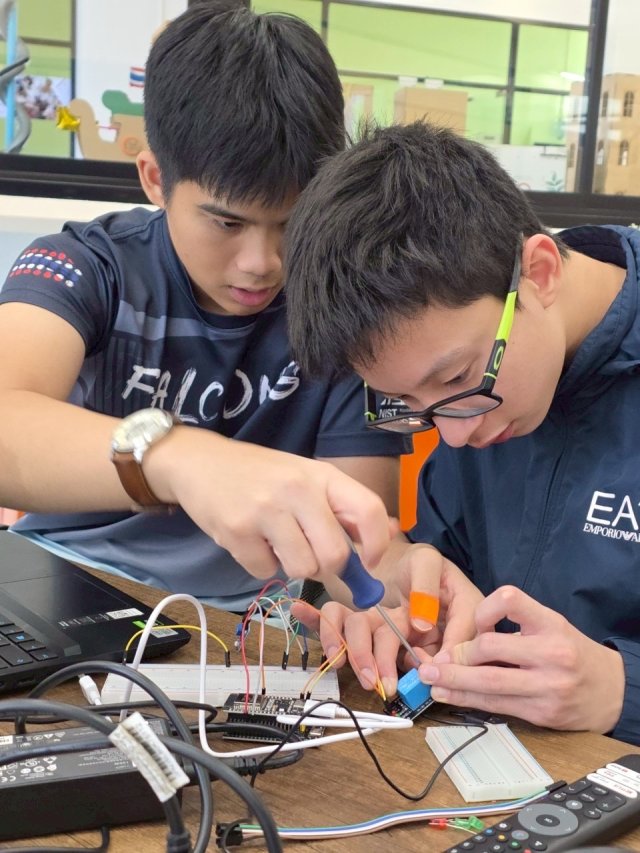
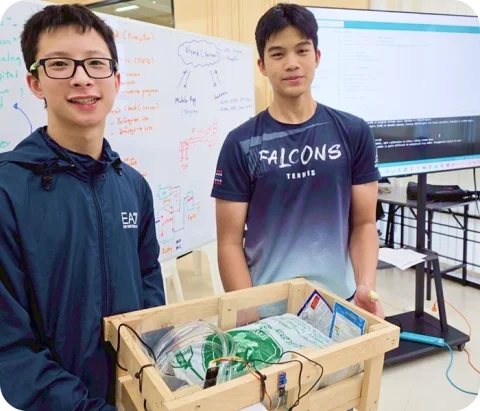
Tul began learning how to develop the system at Darunsikalai, where he and Ming Thongtheppairot worked together on the prototype. The work involved assembling components, connecting the electronics, and testing how the parts operated together.
The prototype provided a starting point for bringing a simple irrigation system into the farmer’s garden.
Taking the system into the garden.
RaiSmart was installed in the field in February 2026. The installation includes solar power, a camera, and a mobile app, bringing the project from prototype development into a real farming setting.